
Creative people can teach us about photography even when they work in a different field. We learn from books, classes, workshops, and time behind the camera, but we can also learn by noticing how a composer, writer, painter, or friend makes room for their work.
Their routines will not automatically become our routines. A famous artist’s habits are not a set of instructions that guarantees good photographs. What interests me is the practical idea underneath: recording a thought before it disappears, protecting time, reflecting on a day, or allowing a piece of work to change as it develops.
Here are four examples worth considering, along with ways to try the underlying ideas in your own photography.
Ludwig van Beethoven: Capture Ideas as They Arrive
Beethoven’s surviving sketchbooks show the work that went into his music. Beethoven-Haus also documents the pocket sketchbooks he carried on walks. They helped him capture and organize musical ideas rather than trusting that every thought would remain available later.
For a photographer, the equivalent might be a small notebook, a voice note, or a quick reference photograph. Write down a place you want to return to, a change in the light, or a question about a project. You do not need to turn every note into a finished photograph. You are giving yourself something to return to.
Photography Clips Newsletter
Get my latest articles, thoughts on photography and creativity, and Photography Clips episodes in your inbox.

Franz Kafka: Find Room for Your Work
Kafka wrote alongside the demands of employment in insurance. The Bodleian Libraries holds a letter to his employer connected with the night he spent writing The Judgement. That record offers a more useful picture than the idea of a writer whose routine always worked perfectly: creative work had to fit around other responsibilities, sometimes with real strain.
I would not take lost sleep as the lesson to copy. Instead, consider what time you can protect without making your life harder to sustain. Perhaps that is an hour to photograph on the weekend, a short walk, or a regular evening for reviewing files. A modest routine you can keep is more useful than an impressive schedule you cannot live with.
Benjamin Franklin: Set an Intention and Reflect
In his autobiography, Franklin included a proposed daily schedule with a morning question: “What good shall I do this day?” The evening question asked what good he had done. His plan combined work with time to review the day. He also acknowledged the difficulty of maintaining perfect order.
That combination of intention and reflection can help us as photographers. Before going out, choose something to pay attention to: light, gesture, backgrounds, or the relationship between two elements. Afterward, look at what happened. What worked? Did anything escape your attention? What would you like to try again?
The point is to learn from the day, rather than turn photography into another test you can fail. An outing that produces no finished image can still reveal something useful.

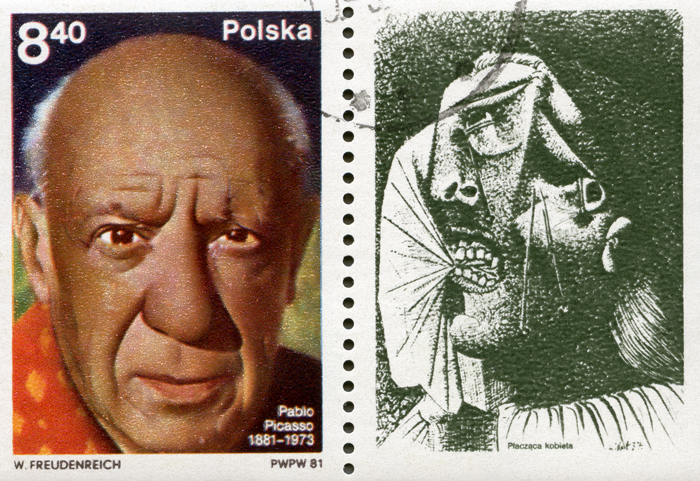
Pablo Picasso: Let the Work Develop
Picasso’s studies offer a visible record of ideas changing through work. MoMA’s study for Les Demoiselles d’Avignon includes figures that did not remain in the finished painting. The composition developed through decisions, revisions, and experiments.
We can apply that idea without expecting inspiration to arrive before we begin. Start exploring a subject. Change your position, adjust the framing, or wait for a different relationship between the elements. A first photograph can be a way of discovering what interests you, rather than a final statement.
Working does not guarantee that a strong idea will appear. It does give you something concrete to respond to. Sometimes the useful decision is to keep exploring; sometimes it is to stop and return another day.
Build Your Own Creative Process
The lesson I take from creative people is to stay curious about how work gets made. Ask a musician how they keep track of an idea. Ask a writer how they return to an unfinished project. Notice what helps a friend begin when they feel uncertain.
Then try one small change in your own photography. Keep notes, protect a manageable stretch of time, review an outing, or make a few exploratory frames. Pay attention to whether the habit helps you see and work more clearly. You are building a process that suits your life and your photographs.
Learn More
Beethoven-Haus: Beethoven’s Life and Pocket Sketchbooks
Bodleian Libraries: Kafka’s Manuscripts and Writing Life
Benjamin Franklin’s Autobiography and Daily Schedule
MoMA: Picasso’s Study for Les Demoiselles d’Avignon
Photography Clips Newsletter
Keep looking. Keep creating.
Follow along with my photographs, journal entries, Photography Clips, and occasional life updates.
Free to join. Unsubscribe anytime.